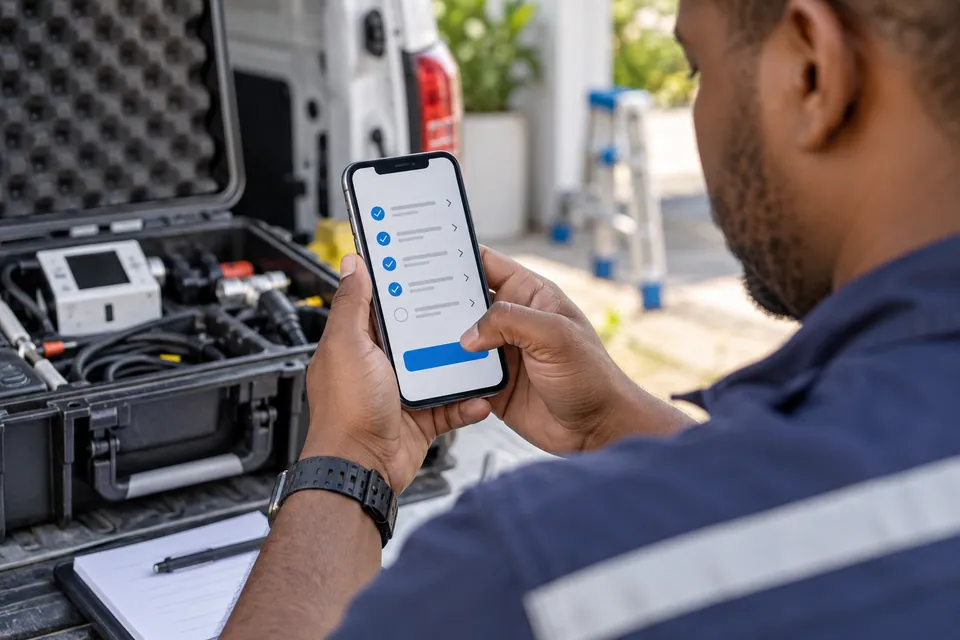
Use-case definition
Identify the frequent customer or staff task that benefits from a mobile application.

Digital 4 Jesus helps businesses turn a mobile app idea into a clearly defined product scope. We examine the recurring customer or staff task, the information it needs and the support behind it, then compare delivery options before committing the business to the cost and responsibility of an application.
A mobile product scope tied to a repeat customer need and an operating plan the business can support.
Establish whether a mobile app is justified, then define the smallest useful product. The scope connects the repeat user task with device requirements, business data and the people supporting it.
Identify the frequent customer or staff task that benefits from a mobile application.
Compare native, cross-platform and responsive web delivery against the actual requirements.
Plan identity, data, notifications and backend boundaries before interface implementation.
Prepare testing, store assets, privacy information and ongoing support responsibilities.
These adjacent pieces often determine whether the primary service can do useful work.
This service is commonly relevant to the following business situations.
Your agreed scope
The initial product scope identifies the user journey, essential capabilities, backend dependencies and acceptance checks. Compare a responsive website, cross-platform application and native implementation against those requirements. Offline use, notifications and identity need explicit decisions rather than assumptions about what an app includes.
We establish who controls distribution accounts, maintains information and handles support before release planning. Store approval, provider charges, backend services and future platform updates are separate dependencies. A discovery or planning engagement is not automatically a commitment to build every feature or guarantee store acceptance.
Repeat user need
An app should support a task that benefits from being available in that format. Consider who will use it, how often the need arises and why the current website or process is insufficient. A list of features does not answer those product questions.
Useful discovery follows a real user through the task, including what happens before and afterwards. That can reveal whether the important improvement is on the phone, in the supporting service or in the way information moves between people.
Delivery options
A responsive website, a cross-platform application and a native application involve different choices. The appropriate approach depends on the required interaction, device needs, existing systems and the business's capacity to maintain the result.
The comparison should include identity, data, notifications and any offline expectations without assuming every app needs every capability. Platform and distribution requirements should be verified during scoping. This creates a decision based on the actual use case rather than selecting a technology because it is familiar or fashionable.
Support and release
A polished interface cannot compensate for unreliable information or an unsupported process behind it. Test representative tasks, including interruptions and incomplete data, and establish what the user sees when the application cannot finish an action.
The scope also needs to identify who handles support, content changes and future releases. Adoption and successful task completion are more useful questions than download totals alone. A focused first version should establish whether people can complete the essential task and whether the organisation can operate the service responsibly.
Before you decide
Only if the user need justifies a separate product. A good responsive website may be enough for occasional information and enquiry tasks. Compare the actual requirements and maintenance burden before assuming an app is the next step.
That depends on how the information is stored, the available interfaces and access rules. The data flow and supporting systems need review before promising an integration or a particular live-data behaviour.
The number and complexity of user tasks, account model, data connections, device needs and operating requirements all matter. Define the essential journey first, then assess additional features against its value and support cost.
Describe the intended users, their repeat task and the systems behind it. Discuss whether an app is justified and what needs proving before a broader build.